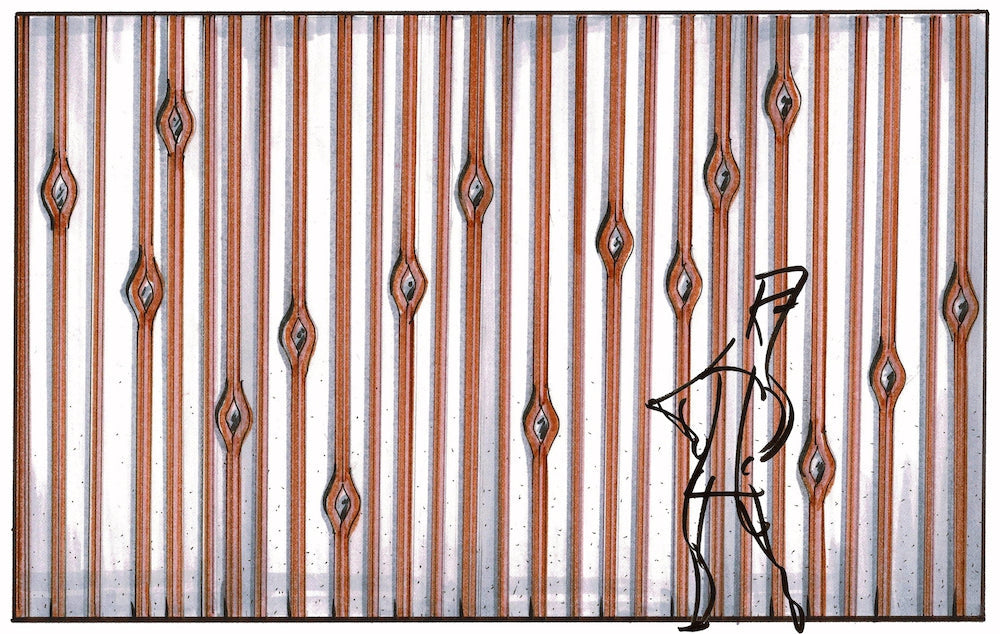

A couple of years ago, Owen, one of our designers, had some bold ideas about designing and fabricating outdoor metal fencing and gates. He believed (and we think rightly so) that our focus on pattern and linework would lend itself to this type of application. After further research, we realized the outdoor metal designs were unfortunately outside the studio's wheelhouse.
Owen had created a cardboard mockup of his outdoor metal designs, and the piece sat near his desk for the next few years, in view of everyone who passed through our design department, sparking interest and ideas.

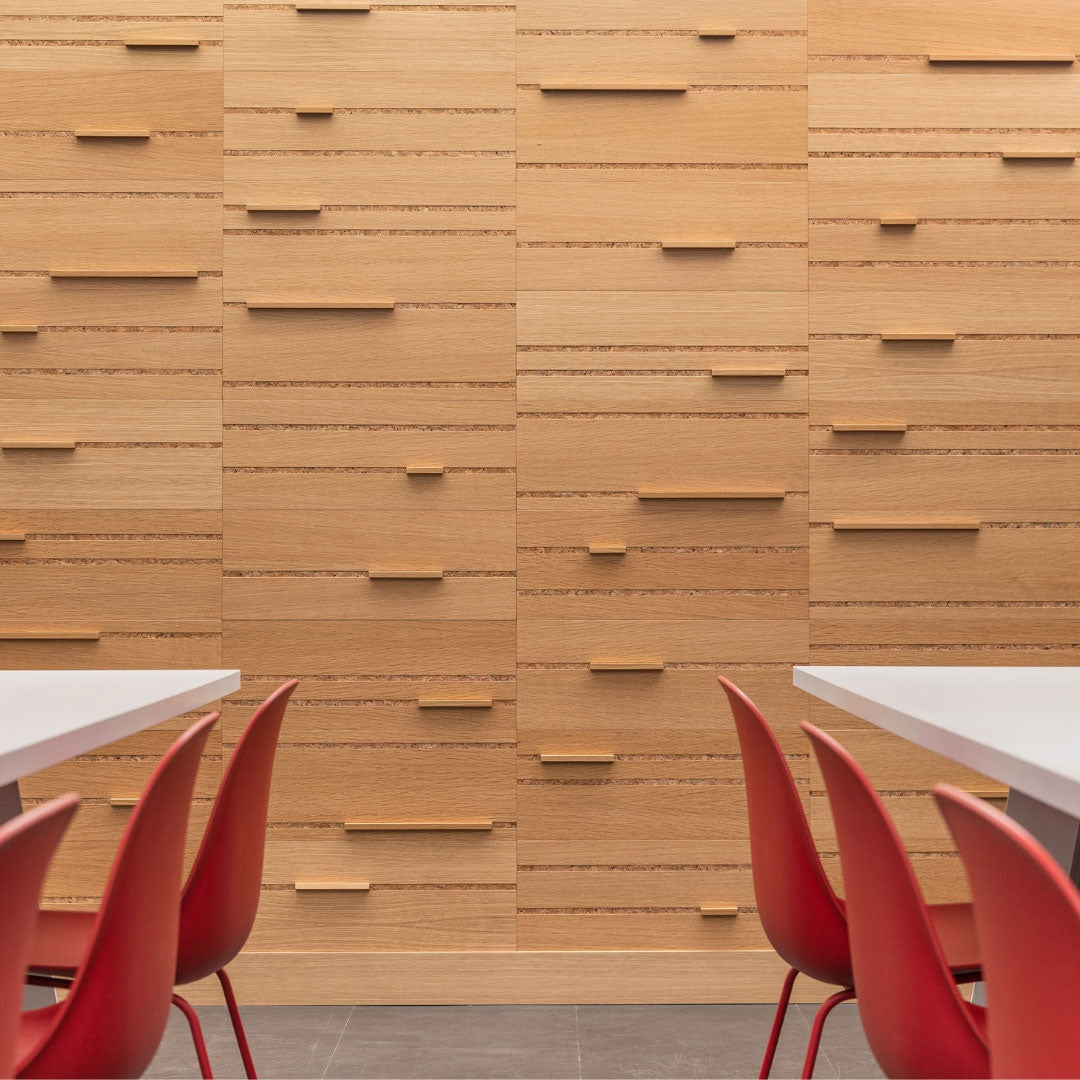
At the end of 2025, as we were considering upcoming product development, the design team began experimenting with bent lamination. (Charles and Ray Eames are design inspirations for our team, and they were pioneers in bent-material furniture. You can learn more about our inspiration and ideation for bent lamination here.) The bent lamination of layers of veneer with a cork core was tested with a variety of material layers, adhesives, and bend layouts. Once the two-layer veneer, two-layer cork, two-layer veneer composition was tested and proven for Ripple, the design team began the process of making it work for Confluence.

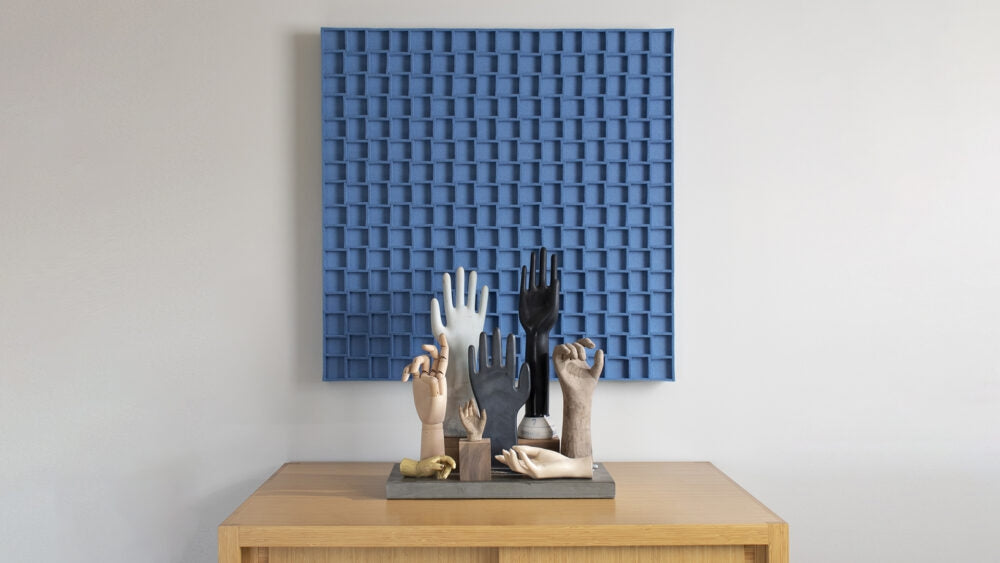
”I think, as a designer at Submaterial, I'm really interested in building on our foundational design work. We have many designs that reference iconic breeze block architecture. And I wanted to build on what we've already done in a different medium."


Making Confluence
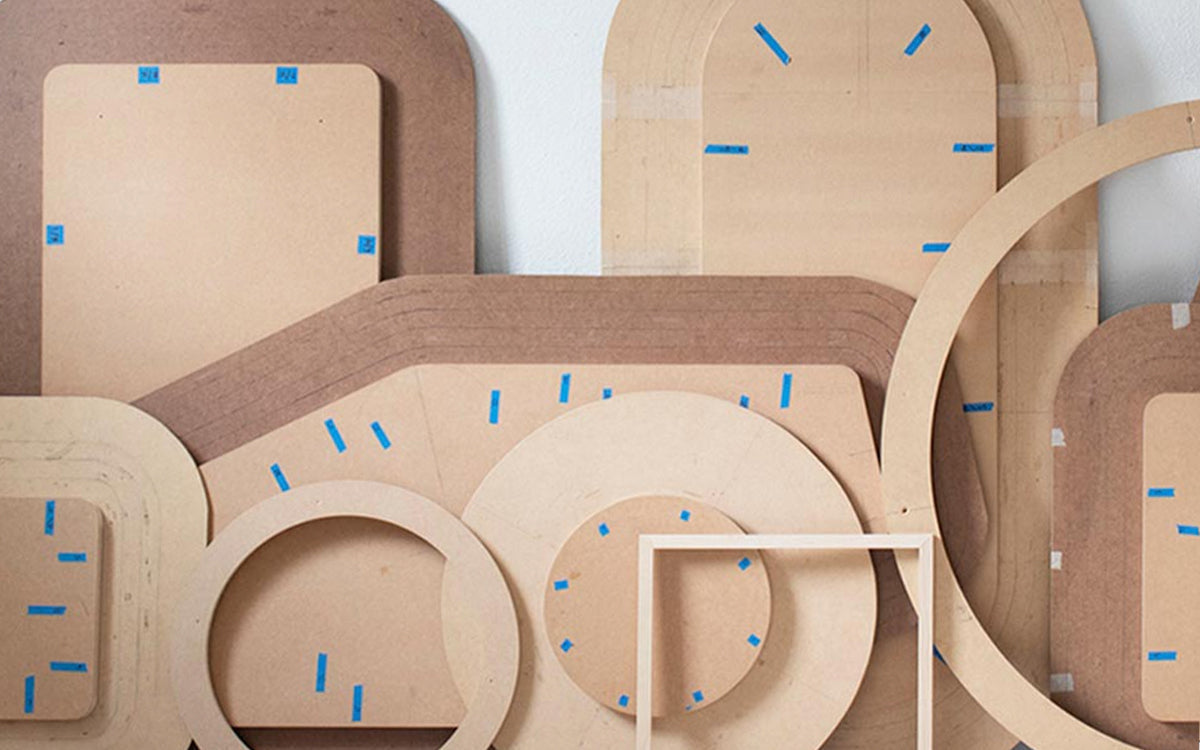
Like the new Ripple Wall Covering, Confluence bent lamination happens in molds. Submaterial doesn't have this machinery in-house, but our team uses the tools and machines at our local makerspace, FUSE.
The video to the right shows the CNC machine creating one half of the Confluence mold from three layers of MDF.
It may be hard to tell from how dynamic the Confluence Screen is, but this product only requires one mold pattern. This makes the molding process, where the layers of the veneer and cork are glued together, immediately placed within the molds, and clamped, very straightforward.
While all Confluence molding happens in one mold pattern, fabricating the complete screen requires several more steps after this lamination process.

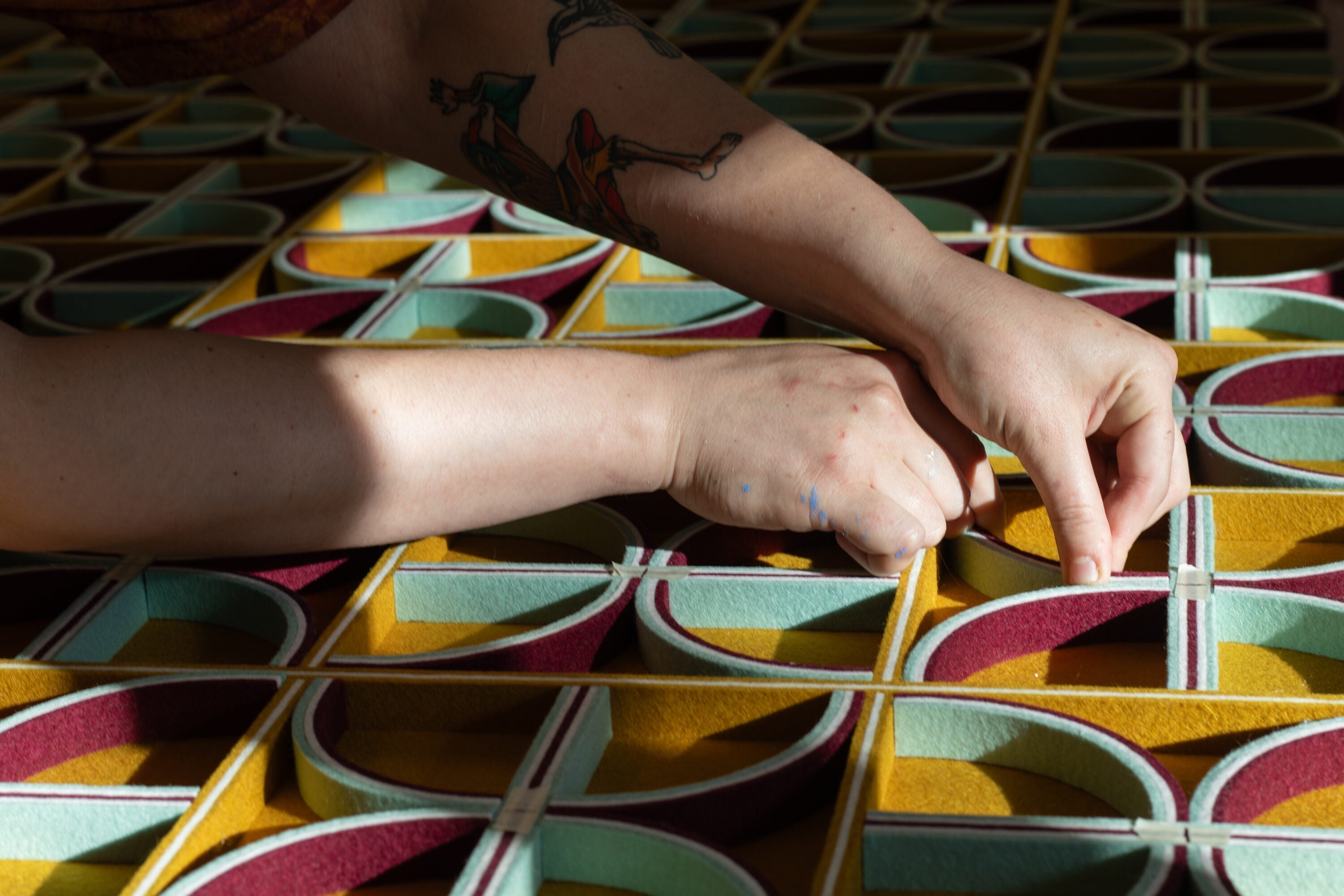
Once the full tile is demolded, it needs to be cut into the narrow, bent strips that make up the screen's lattice. The team cuts these details cleanly and precisely so the pieces fit together squarely. Next, two bent pieces are joined in the middle with a rectangular block of the same material composition and clamped to dry. The result is the X-shaped module. Once all modules are created, they are laid out within the long vertical piece and the frame to bring the entire product together. Finally, the entire wooden surface is finished in house, to seal and protect the wood.
This isn't a quick assembly process, but the time, skill, and attention to handcrafted detail make this piece truly special.

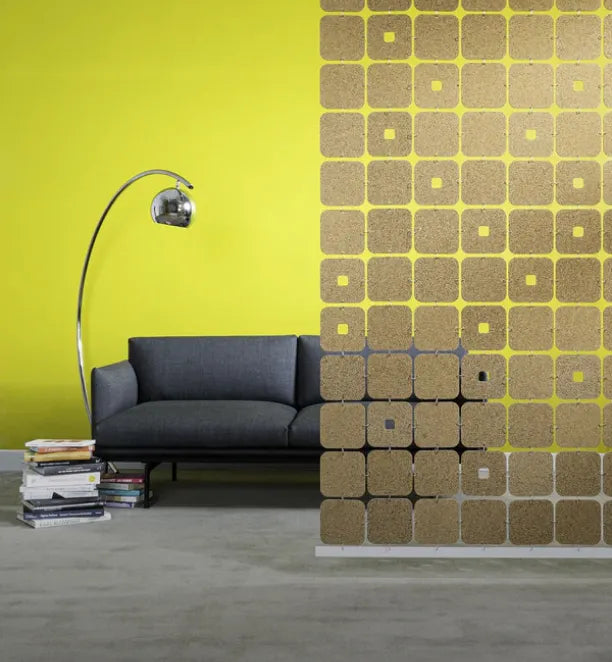
And here is the Confluence Room Divider!
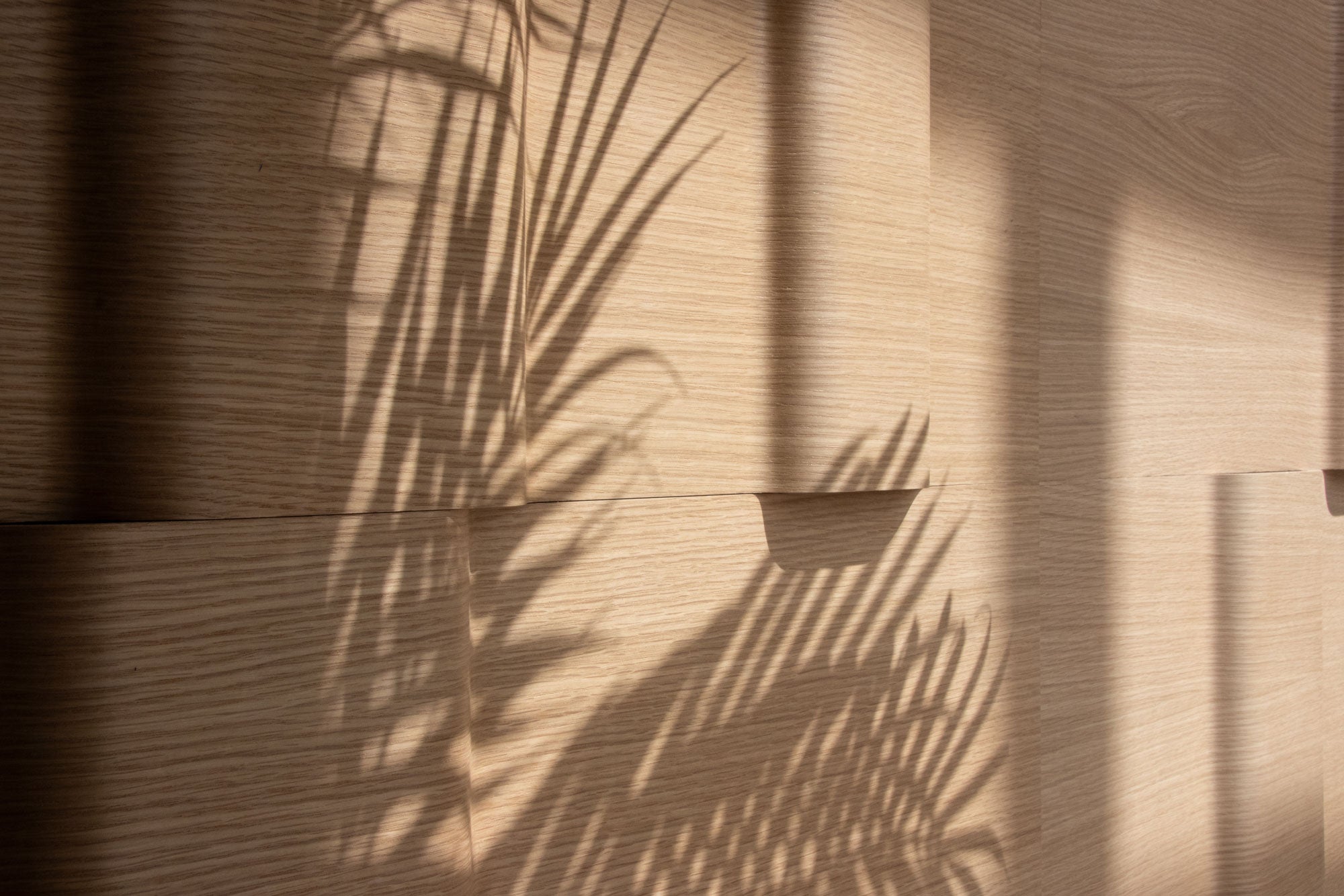
Architectural and decorative, modern yet nostalgic, movable or permanent, the Confluence Screen is more than meets the eye. Handcrafted from wood veneer and cork, its bent lamination forms curves that converge and diverge into a striking rhythmic pattern — functional in dividing space, dramatic in shaping light. The deep dimensionality of the details lets the wood's rich grain shine, while the apertures cast arresting shadows across the surrounding space.

Movable partition or fixed installation?
- As a movable partition, Confluence uses a heavy, powder-coated metal base. This base adds a fun pop of color while allowing flexibility in placement. Want to separate a two-desk workspace? Sure. But if one of those people returns to their office, you can move the screen to create a cozy reading nook in the living room.
- In a fixed installation, the screen is anchored to the wall or the floor and ceiling to create a more permanent architectural feature. The method also allows for a shallower room divider by removing the base plate.
Where can the Confluence Screen work in your project?
Owen says, "I think because of the variety of mounting options, Confluence Room Divider can really go anywhere. But its main use is to define a space. So whether that's defining a cozy little sitting space, organizing a work area, or adding some subtle privacy to a bedroom in an open space."