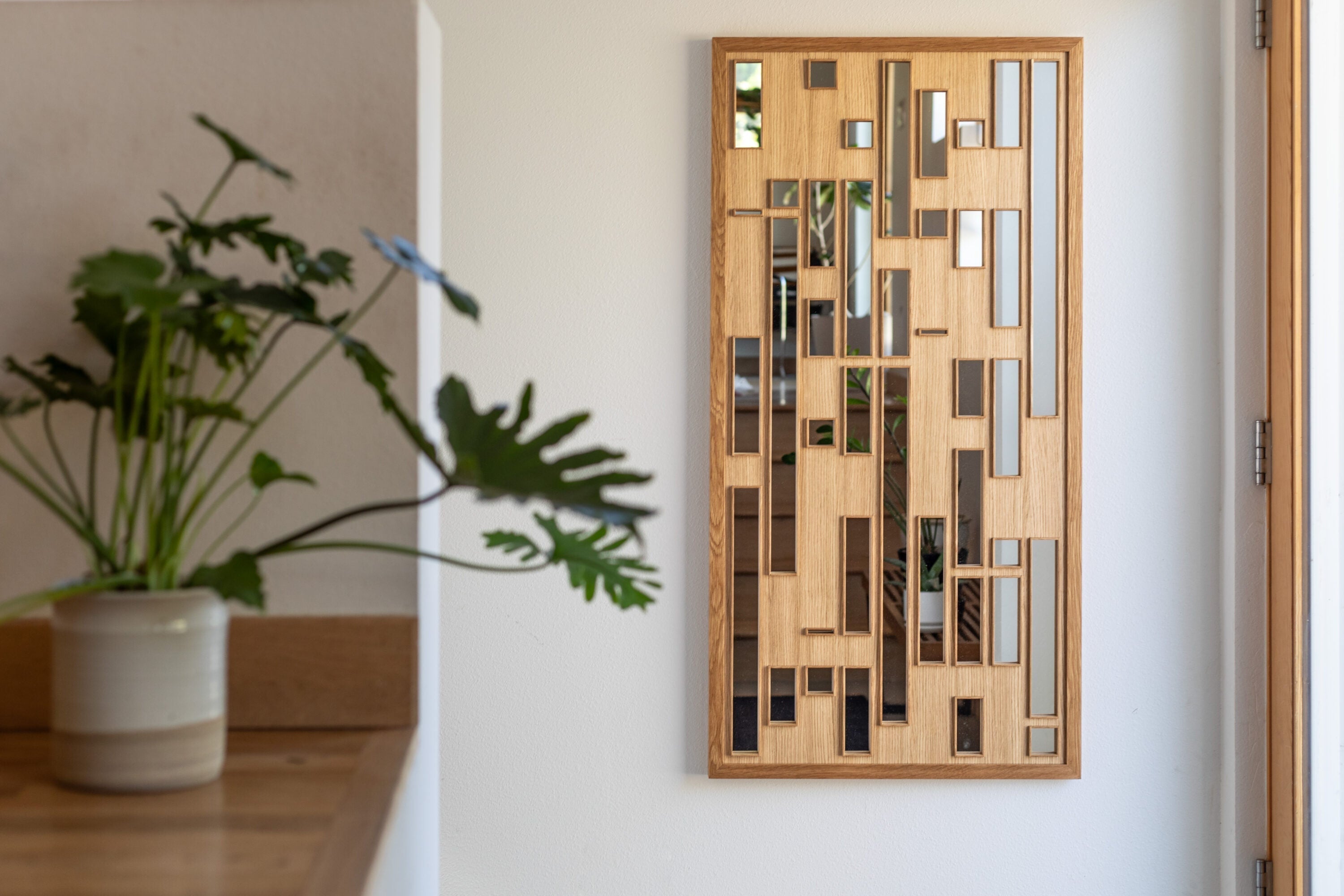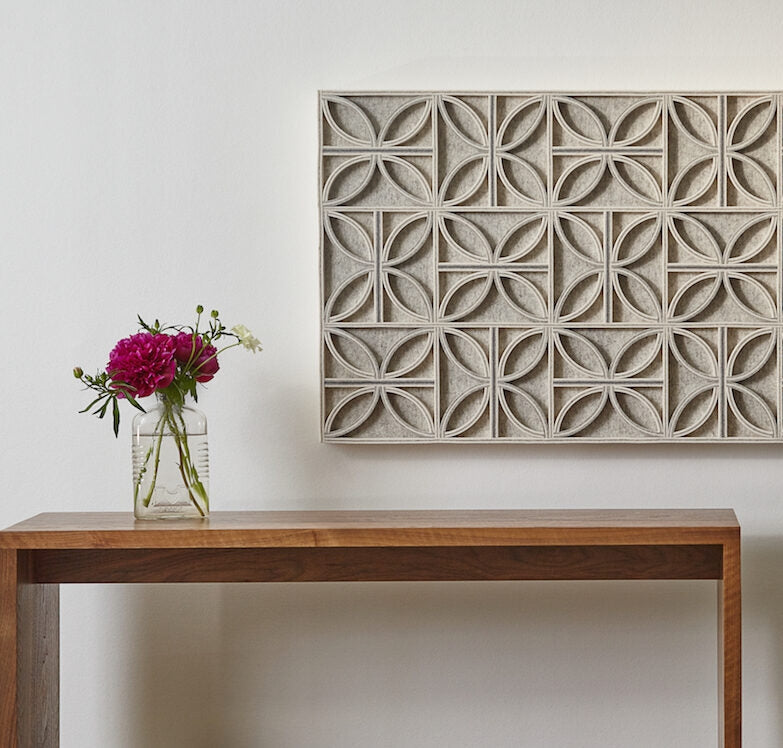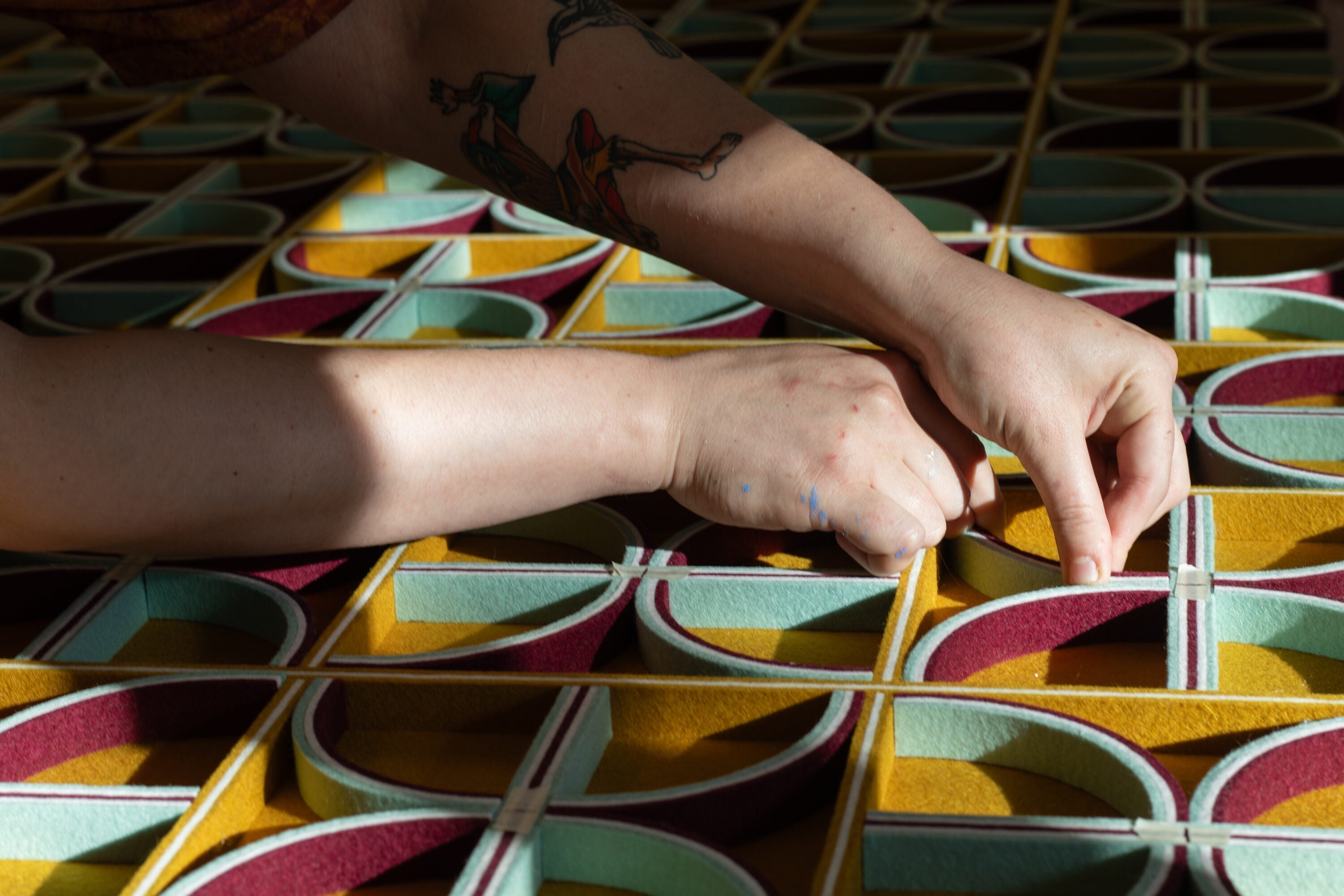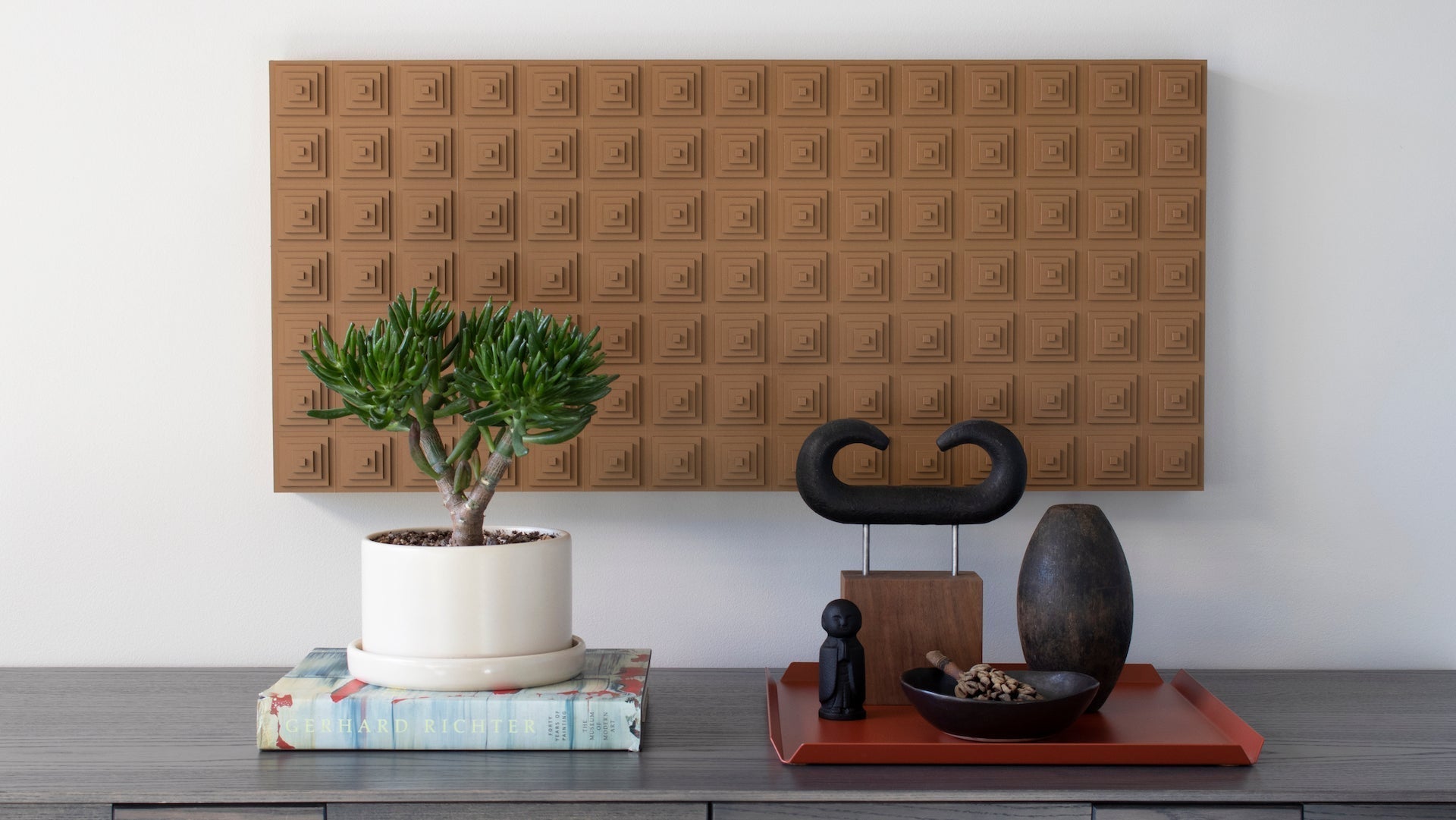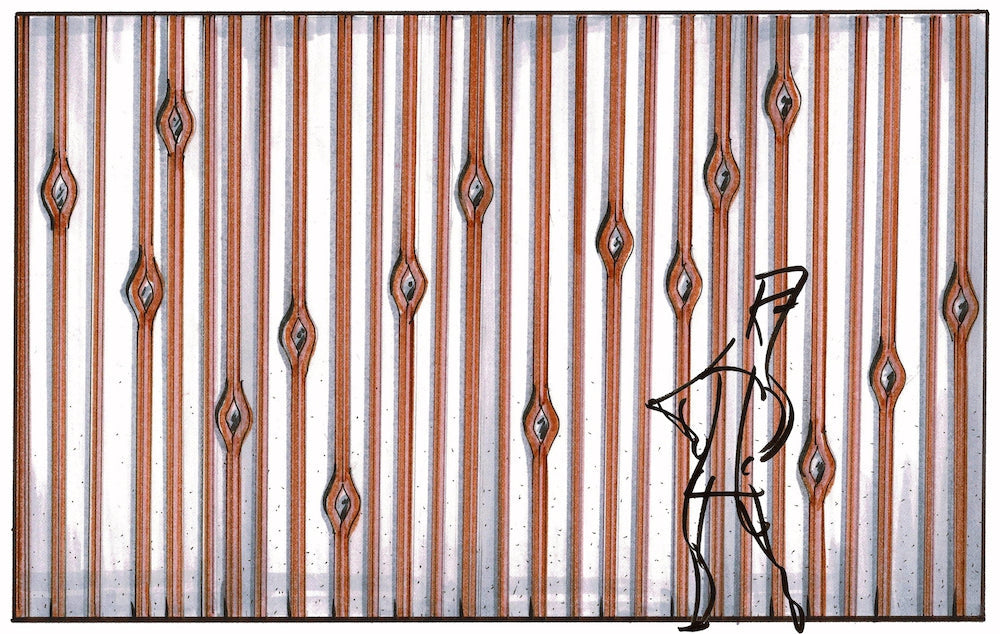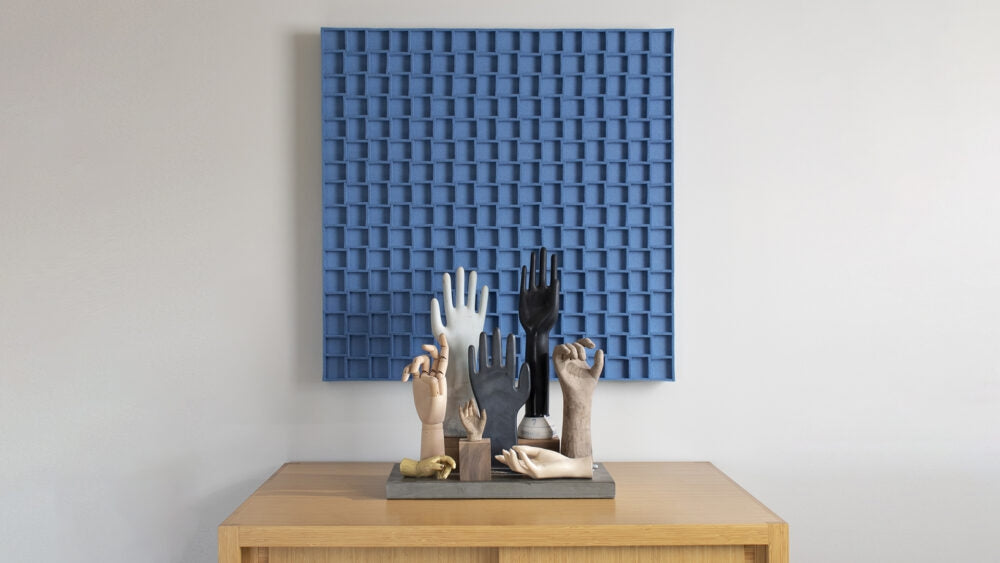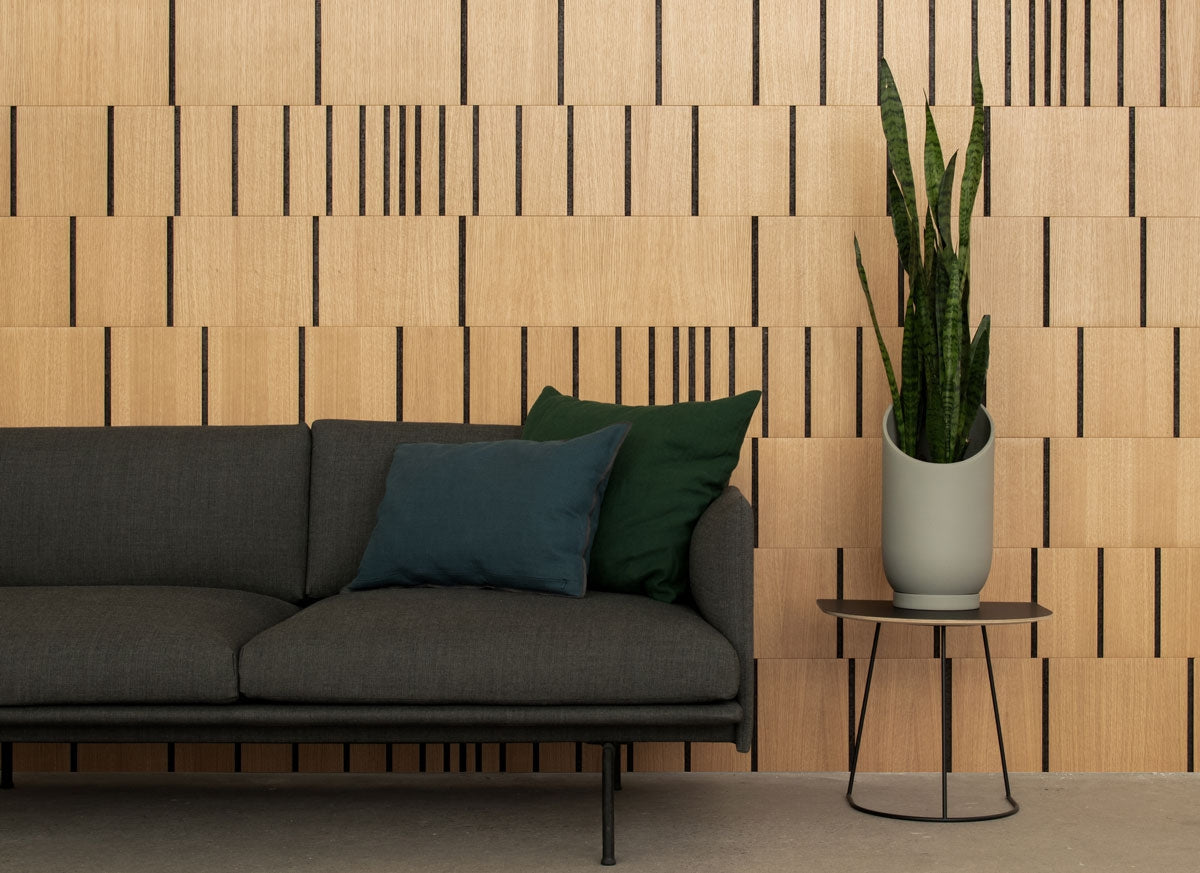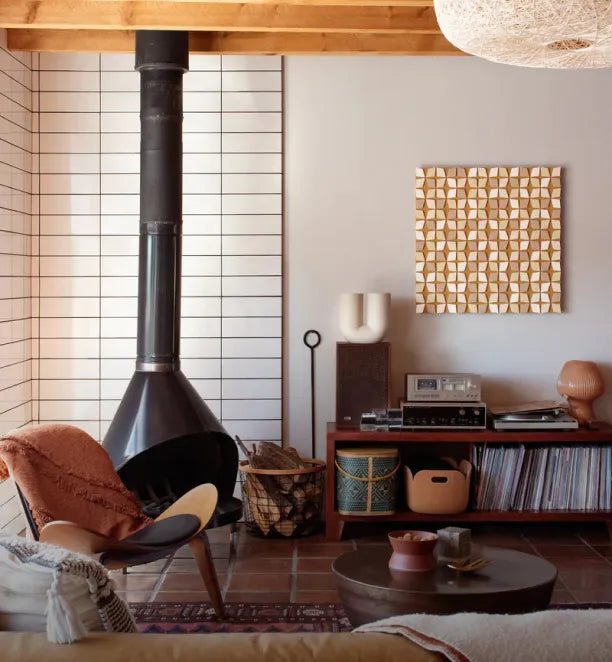
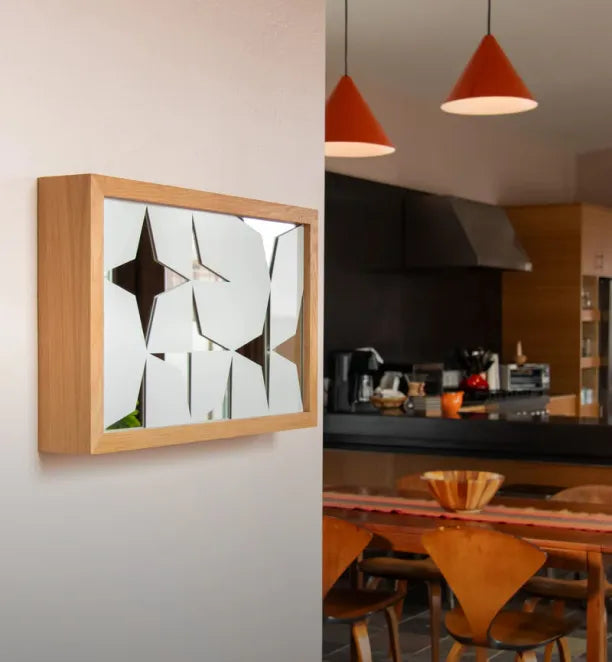
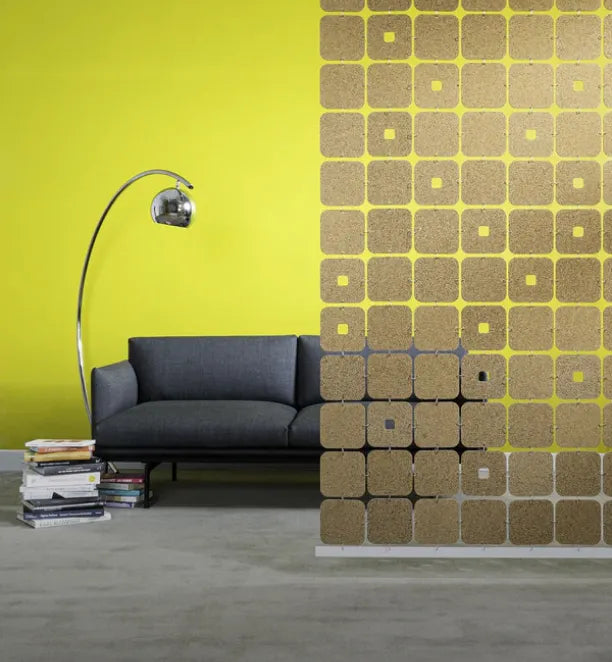
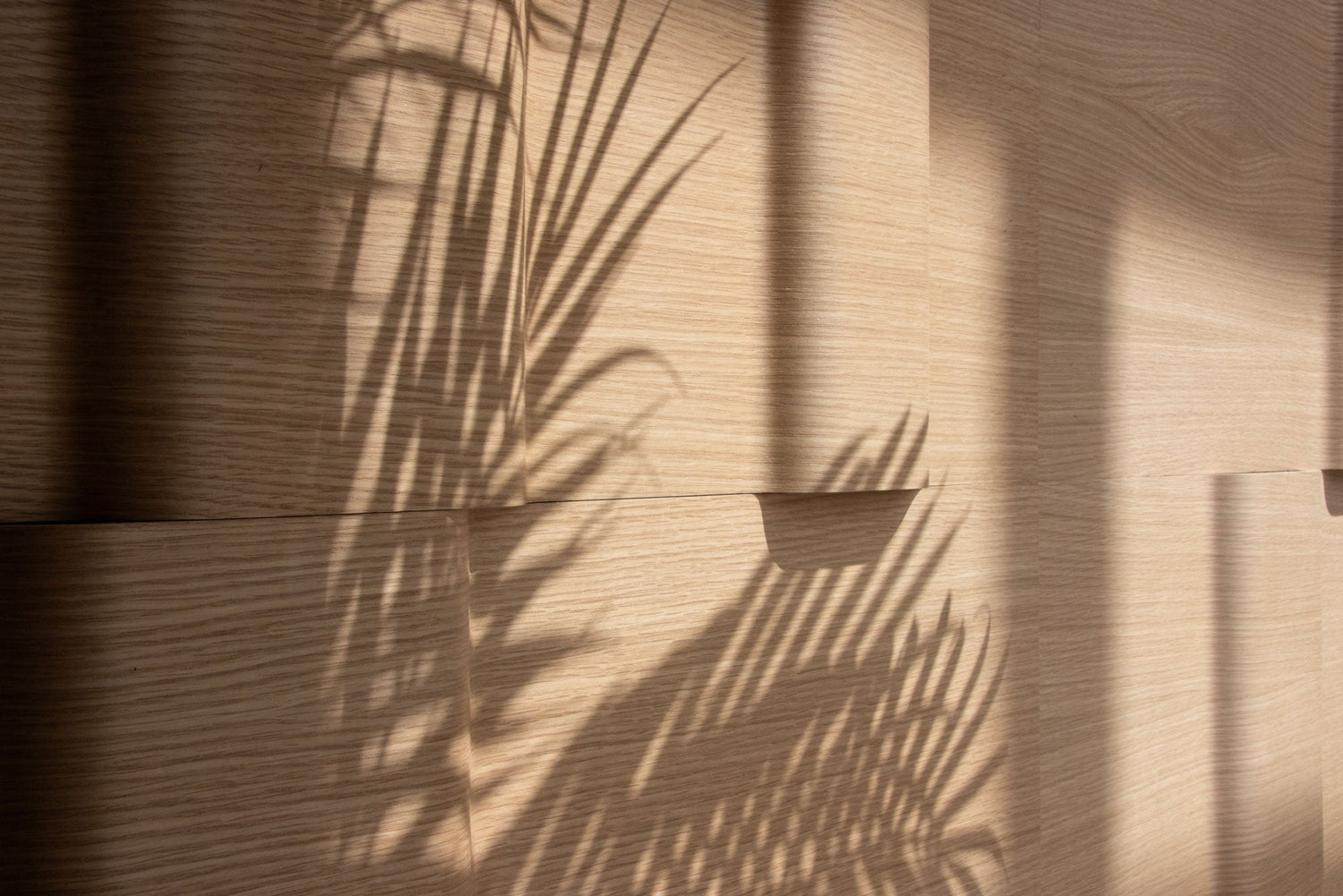
In 2022, Submaterial introduced the Wood Series, a graphic, modular, tile-based wood wall covering collection. The first two designs within this new offering were Gradient and New Angle. This new collection utilized wood and cork, a material that, up until this point, we had largely used only as a substrate. Gradient and New Angle featured bold linework created by cork inset into channels on the surface of the wood veneer.
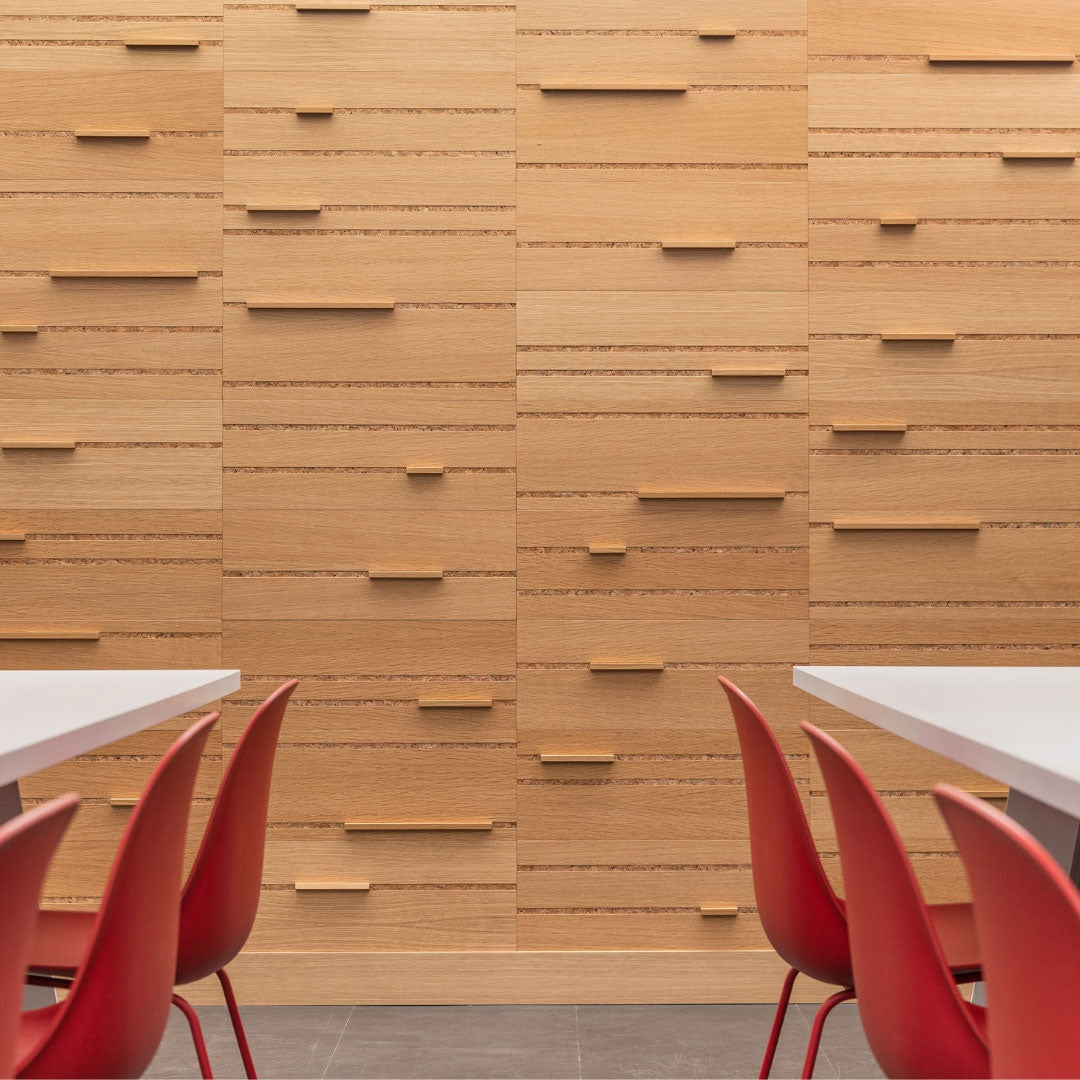
The following year, we expanded the collection with two new designs that also offered additional features. Route was a tile-based design, while Transit was a panel-based design. While the tiles are glued directly to the wall, the panel-based products are installed via Z-clips. This allowed for easier, faster installation and wall coverage. Another feature of these 2023 designs was the ability to add solid wood bars or wood-and-cork bars to the inset linework, creating dimensionality that was not only inset of the surface but also proud of the face.


We stepped away from Wood Wall Covering designs for a few years but caught the itch again last year. The end of 2025 and the start of 2026 were busy with product development, iteration, prototyping, and initial manufacturing of numerous designs. A spate of new products was planned for exhibition at ICFF in May 2026 and release late in the year, and one of these products is RIPPLE!

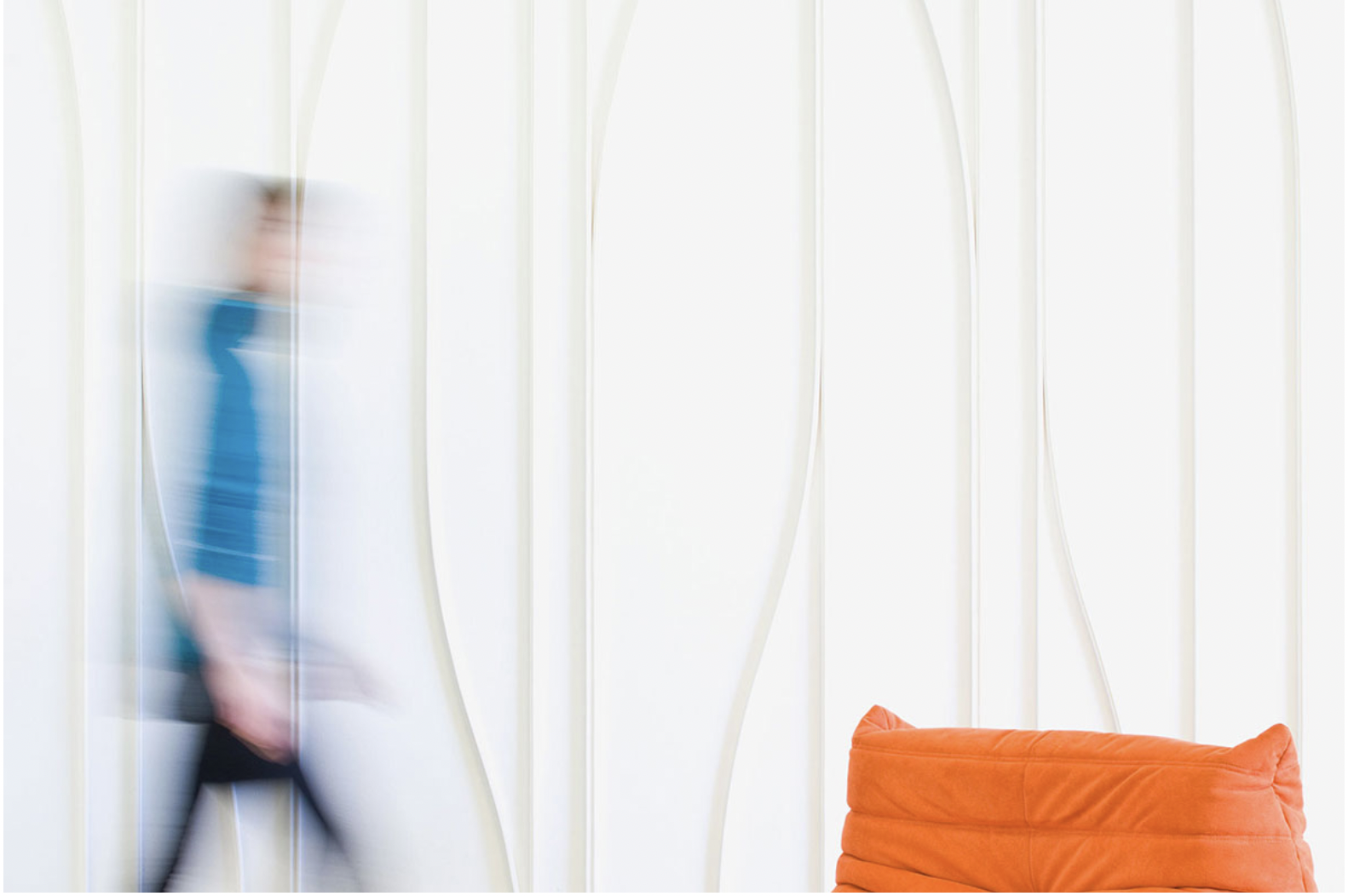
Ripple Wood Wall Covering transforms any wall into a dynamic architectural feature. Its flowing, sculptural form is crafted from precision-bent laminations of wood veneer and natural cork. The deeply dimensional surface allows for dramatic pools of light and shadow.
"We experimented with how we can bend a single material over the face of a wall”
Material and Manufacturing Inspiration
The early designs of Wood Ripple were centered around bending a single material (in some way) over the surface of a wall. The initial tests and prototypes were fabricated with numerous layers of wood veneer, in an attempt to create the product from that single material.
However, when placed in the molds for bending, the layers of wood veneer did not result in the clean curves planned for this product. Additionally, using a material most often seen as a finished surface for all layers resulted in a very costly product and a very extended production time.
At this point, the team turned to cork (which is honestly unsurprising, given it is one of our favorite materials). They tested different thicknesses of cork, composites, and layouts. The final composition is two layers of natural cork, sandwiched on both sides by two layers of veneer in either white oak or walnut.
Ripple celebrates cork as an exposed core revealed through its sculpted valleys and hills. Cork-core bent lamination, largely unseen in contemporary furniture and product design, also enhances the acoustic performance of this product. Finally, after all the iteration and prototyping, Ripple was ready for a small production run and its big reveal at ICFF.

"I have always been intrigued by bent lamination processes and products, an interest that has anchored both my architectural education and my professional career, heavily inspired by the iconic work of Eames and Kartell."

Perhaps, unsurprisingly, our design team takes inspiration from the masters of mid-century design, Charles and Ray Eames. The Eameses not only created chairs in molded wood and plastic, but also made whimsical wooden animals, organic sculptures, and, early in their career, molded leg splints and stretchers for the U.S. Navy.
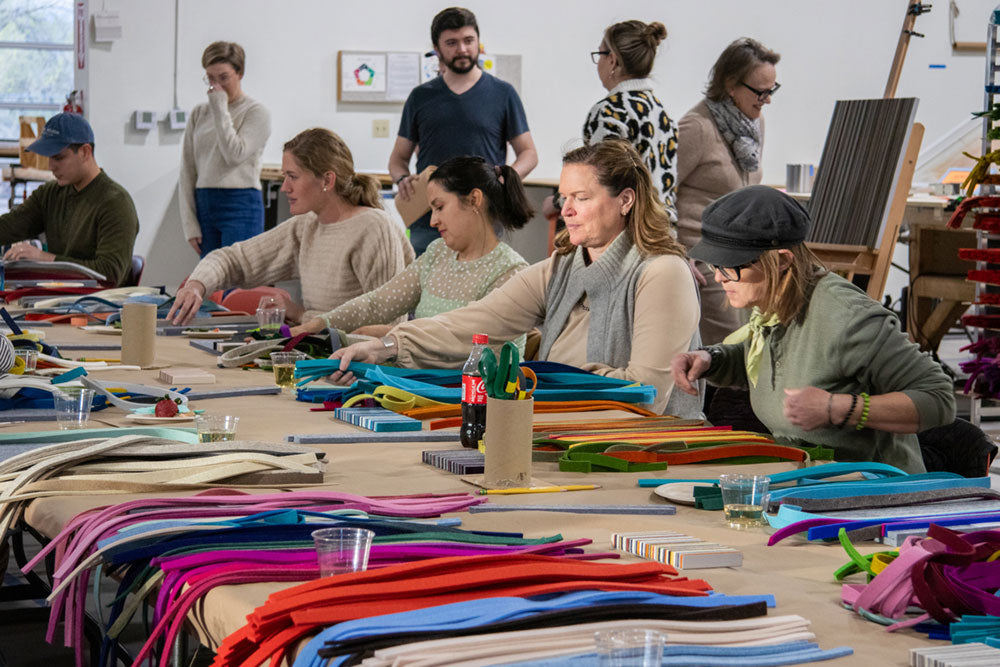
According to the Eames Office, the pair developed a deeply iterative prototyping process where they built models and full-size mockups over and over until they were happy with the result. They also approached problems and challenges with curiosity and an expectation of working through the process within their own studio to improve their team's skill and resourcefulness. This iterative, hands-on design process, Damian notes, is something he and the design and fabrication team at Submaterial use in our own product development, and it was through this type of work that Ripple was refined.
Linework Inspiration
The patterns that make up Ripple's three-dimensional linework were inspired by the turning bays and curb cuts that direct traffic in urban landscapes. The soft jogs that occasionally pull you from the straight lines of the road.

Manufacturing Ripple
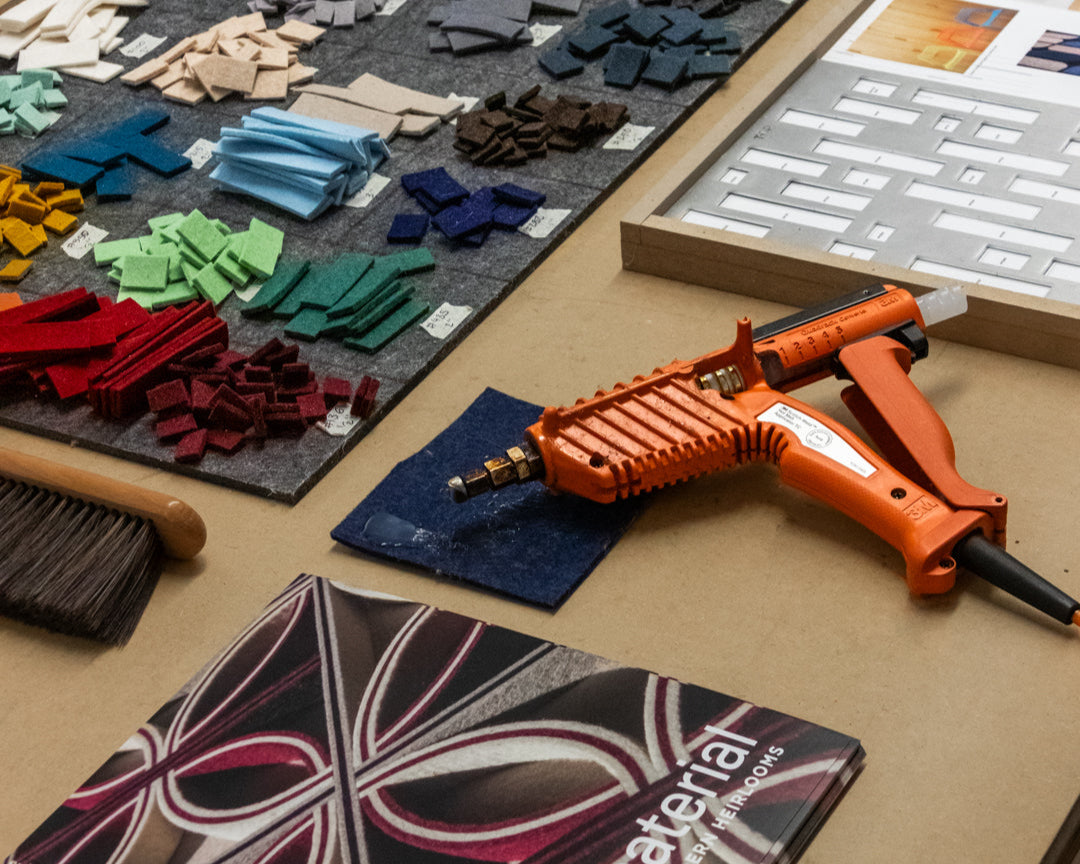
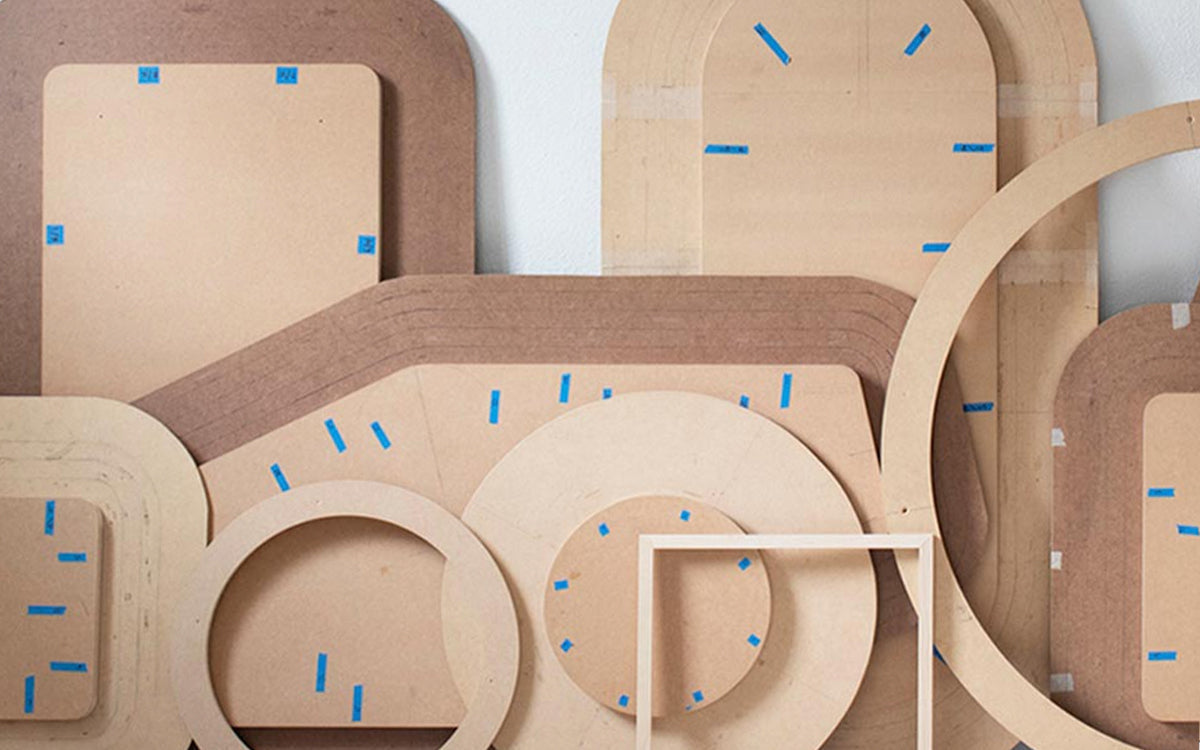
Like the Eames Office, Submaterial also looks to do as much of the work as possible in-house. For each new product, this can look different. For Ripple, the bent lamination happens within molds. We do not have machinery in our studio that can create these molds. Our design team often utilizes our local makerspace for tools and machines we don't have in-house. They created the molds at FUSE with their large CNC machine. The molds were then brought back to Submaterial, where the layers of the veneer and cork were glued together, immediately placed within the molds, and clamped for the drying time. The style and tension of the clamping were other factors our team iterated on to discover the quickest (because the adhesive has a short open time) and most efficient method, resulting in a clean, sturdy, and uniformly bent tile.
Following the demolding, the tiles are trimmed to final size, finished in-house with a water-based poly, and the z-clips are attached for installation.

And here is the result!


Some facts about Ripple:
- Ripple extends nearly an inch and a half from the wall surface. This dramatic relief creates highlights and deep shadows when illuminated by directional overhead or side lighting.
- Ripple tiles are 30" W x 15" H. This scale (larger than our other wood wall options) ensures faster installation and lower labor costs. The dimensions were carefully considered to maximize material yield and minimize pre-consumer waste.
- We are currently testing colored stains on wood veneer for another upcoming project, and we are excited at the possibility of offering a color-drenched installation option for clients who are bolder in their interior colorways.
So, where can Ripple Wood Wall Covering work in your project?
In commercial environments, Ripple would work well in high-traffic zones like lobbies, waiting rooms, or conference rooms- spaces where the architectural program demands high-performance acoustic treatment to handle large gatherings. Ripple can also be an exceptional backdrop directly behind office workstations, providing a clean, sophisticated, and visually engaging texture for virtual meetings.

Ripple is also perfectly suited for high-end residential interiors. It beautifully serves as a backdrop in double-height spaces with vertical circulation, or as a grounding, natural element to anchor a main living or dining area.